
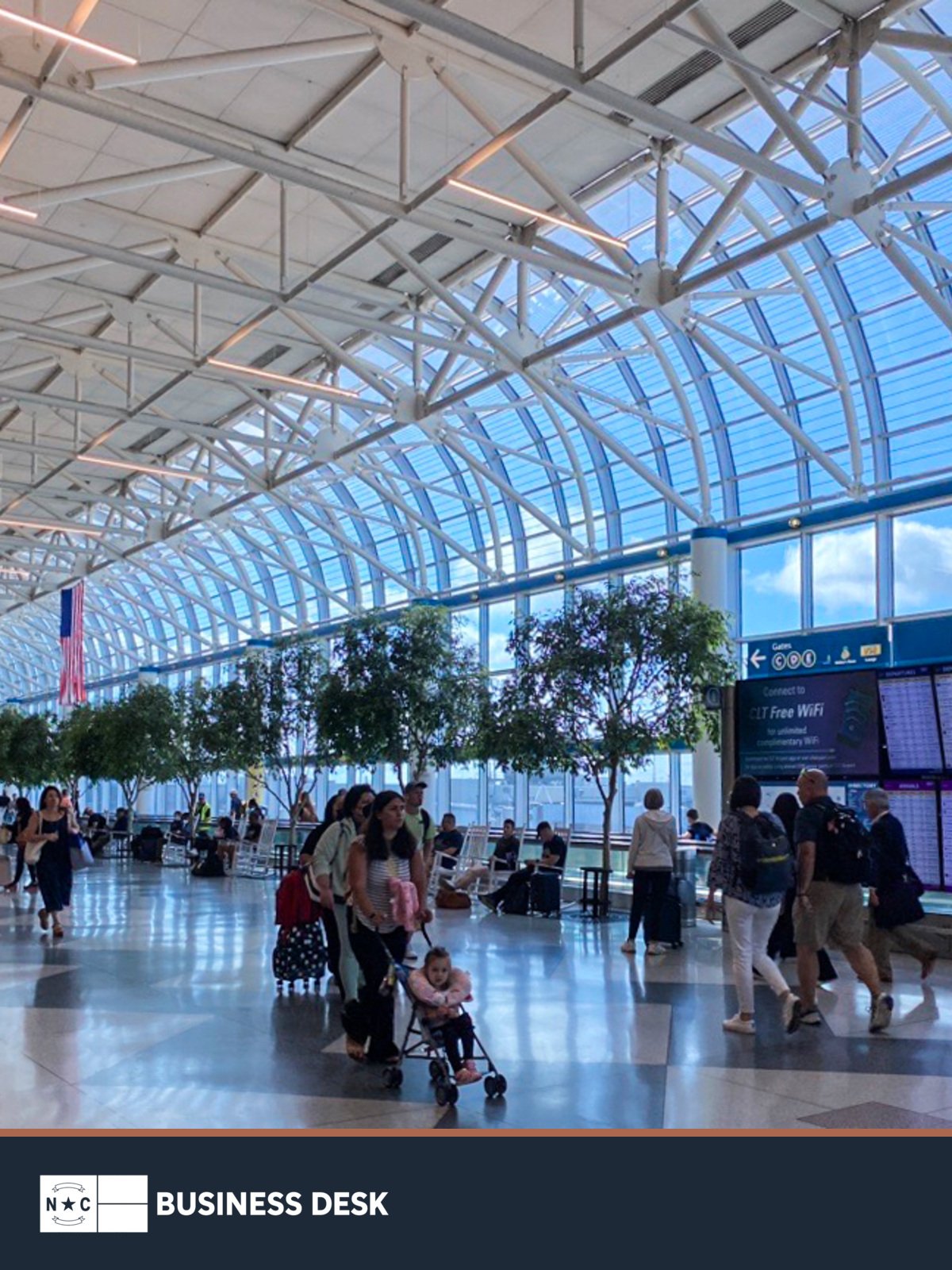
CHARLOTTE – Charlotte City Council approved a 10.5-year airline use and lease agreement for Charlotte Douglas International Airport, authorizing an airline-backed $2.1 billion capital program for terminal, airfield and other critical airport infrastructure.
The agreement begins Jan. 1, 2027, and runs through June 30, 2037. The city record also authorizes a possible five-year extension if specified conditions are met, including additional airline commitments to capital investment.
The preapproved capital program is more than four times the size of the program in the airport’s 2016 airline agreement, according to the City of Charlotte. The new agreement also creates a process for approving other required airport projects during its term.
WFAE reported that council members approved the agreement 8-2. The construction program is expected to be funded through higher airline fees and includes expansion of the main atrium, new gates at the end of Concourse C and a tunnel connecting the terminal to the new gates.
The agreement updates gate-use targets and allows the airport to reallocate underused facilities, which the city said is intended to improve access for new carriers and airlines seeking to expand service. Signatory airlines also commit to lease terminal and airfield facilities and cover the costs of operating and maintaining them.
The financial framework directs 55% of annual shared revenue to the city and 45% to the signatory airlines. It also requires rents, fees and charges sufficient to cover the city’s costs for airline use of the terminal, airfield and related facilities, along with enhanced debt-service protections.
The city began negotiating a successor to the 2016 agreement in 2024 and had extended the prior agreement while talks continued. The Nov. 9 vote converts the earlier CLT Beyond proposal into an approved long-term operating and capital framework for one of North Carolina’s largest transportation assets.
The business consequence is a $2.1 billion airport investment program with direct implications for airline operations, construction activity, passenger capacity and the region’s long-term transportation infrastructure. The approval authorizes the framework; it is not a project-by-project construction award or evidence that the listed work is complete.