
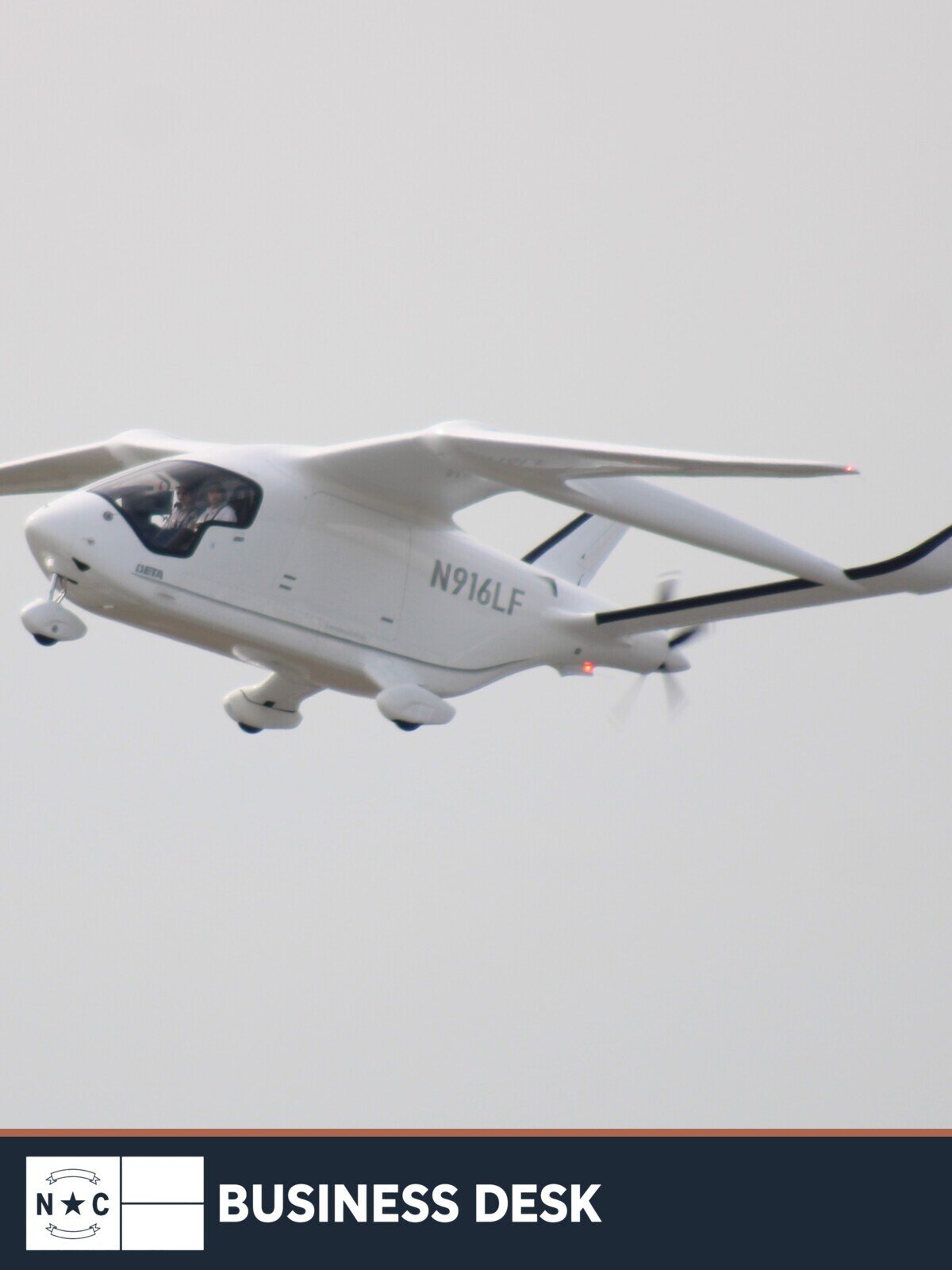
RALEIGH — BETA Technologies completed more than 16 medical and disaster-response missions across North Carolina during the first week of a state advanced-aircraft pilot. The flights move the program from planning into real-world operations and begin producing data for future aviation rules and infrastructure decisions; they do not launch commercial service.
BETA’s electric ALIA aircraft flew among Raleigh Executive Jetport in Sanford, Pitt-Greenville Airport and Dare County Regional Airport, carrying a field medical station and supplies, according to the U.S. Department of Transportation. USDOT described Joby Aviation’s J208 as remotely piloted when it flew from Dare County Regional Airport to Raleigh-Durham International Airport; NCDOT says every eLIFT-NC operation has a licensed pilot aboard and automation-enabled activity remains under human oversight.
The N.C. Department of Transportation says eLIFT-NC is intended to test a statewide aviation network connecting airports, hospitals and rural communities for medical logistics and disaster response. The first phase uses BETA’s CX300 electric conventional takeoff-and-landing aircraft and Joby’s J208. The manufacturers are operating under experimental airworthiness approvals and FAA-approved procedures.
The initial operations give airports and healthcare partners data on routes, turnaround requirements, charging and other infrastructure before any permanent service or construction decision. Current testing uses existing airports. NCDOT says later operations could require charging stations, landing pads, ground-handling equipment and safety systems.
Aerospace Global News independently reported that operations began Sept. 17 and covered more than 1,300 nautical miles, including simulated healthcare deliveries. The publication also reported that BETA has charging equipment at Raleigh Executive Jetport and more than 15 additional North Carolina charging sites in development.
Additional test flights are planned through the rest of 2026. USDOT and NCDOT have not disclosed a program budget, a permanent route schedule or a new North Carolina job total. The aircraft remain experimental, and the pilot is designed to gather operational and safety data for future FAA rulemaking.