
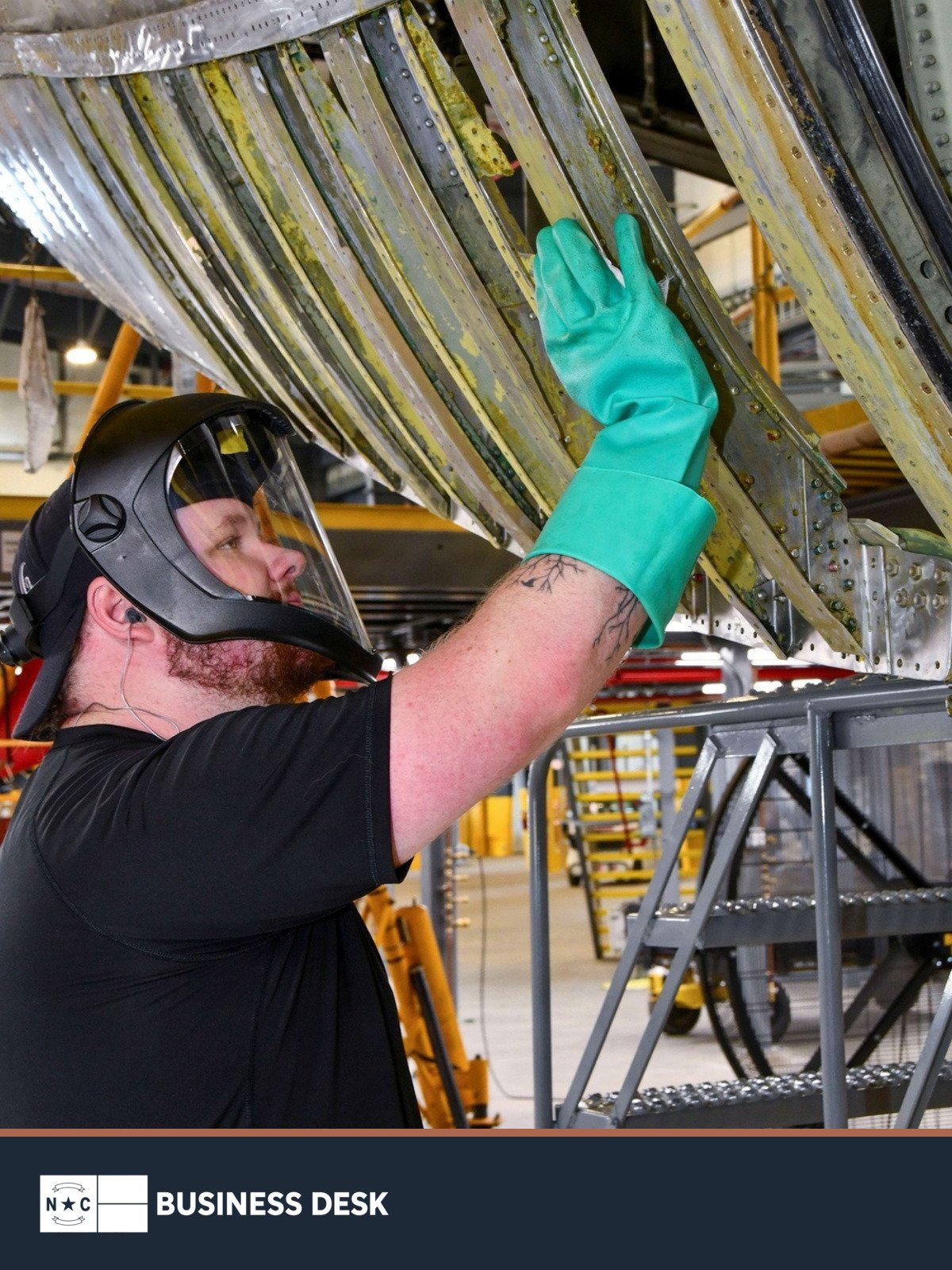
KINSTON – Fleet Readiness Center East has begun the first full-scale C-130T maintenance cycle at its new Global TransPark complex, activating a workload tied to more than 400 high-skilled jobs and an estimated $164 million in annual eastern North Carolina economic impact.
Naval Air Systems Command reported Nov. 12 that the first C-130T Hercules entered the Kinston facility for scheduled maintenance. The induction begins the site’s first full-scale maintenance, repair and overhaul cycle for the aircraft since Fleet Readiness Center East was selected as the Navy’s designated repair point for the C-130 fleet.
The milestone moves the complex from opening-stage activity into a multi-month heavy-maintenance workload. Fleet Readiness Center East previously performed shorter inspections and field support for the C-130, but the Kinston site is designed to handle full planned maintenance intervals.
The North Carolina Department of Transportation says the Navy expects the facility to employ more than 400 people in high-skilled jobs and generate $164 million a year for the eastern North Carolina economy. The Navy leases the complex from the state-owned Global TransPark.
The roughly 700,000-square-foot facility spans about 75 acres and connects directly to the industrial park’s 11,500-foot runway. It is intended to support Navy and Marine Corps C/KC-130 aircraft and Air Force HH-60W helicopters. State lawmakers approved a $350 million loan in 2023 to prepare the complex, according to NCDOT.
NAVAIR projects the C-130 line will generate more than 350,000 direct artisan labor hours by 2030. The first aircraft was cleaned and stripped at Tinker Air Force Base in Oklahoma before arriving in Kinston, while Fleet Readiness Center East expects its own paint-and-strip capability to become operational in early 2027.
The new site is part of Fleet Readiness Center East, which NAVAIR describes as North Carolina’s largest maintenance, repair, overhaul and technical services provider. The organization has more than 3,800 civilian, military and contract workers and annual revenue above $868 million.
The first induction does not mean the Kinston complex has reached full operating capacity. It establishes that the heavy-aircraft maintenance mission is now producing active workload at the facility, while additional capabilities and hiring continue to ramp up.
For eastern North Carolina, the business consequence is the conversion of a large public infrastructure investment into a long-duration aerospace and defense workload. The projected jobs, labor hours and annual economic activity give the operational milestone a measurable effect beyond the arrival of a single aircraft.