
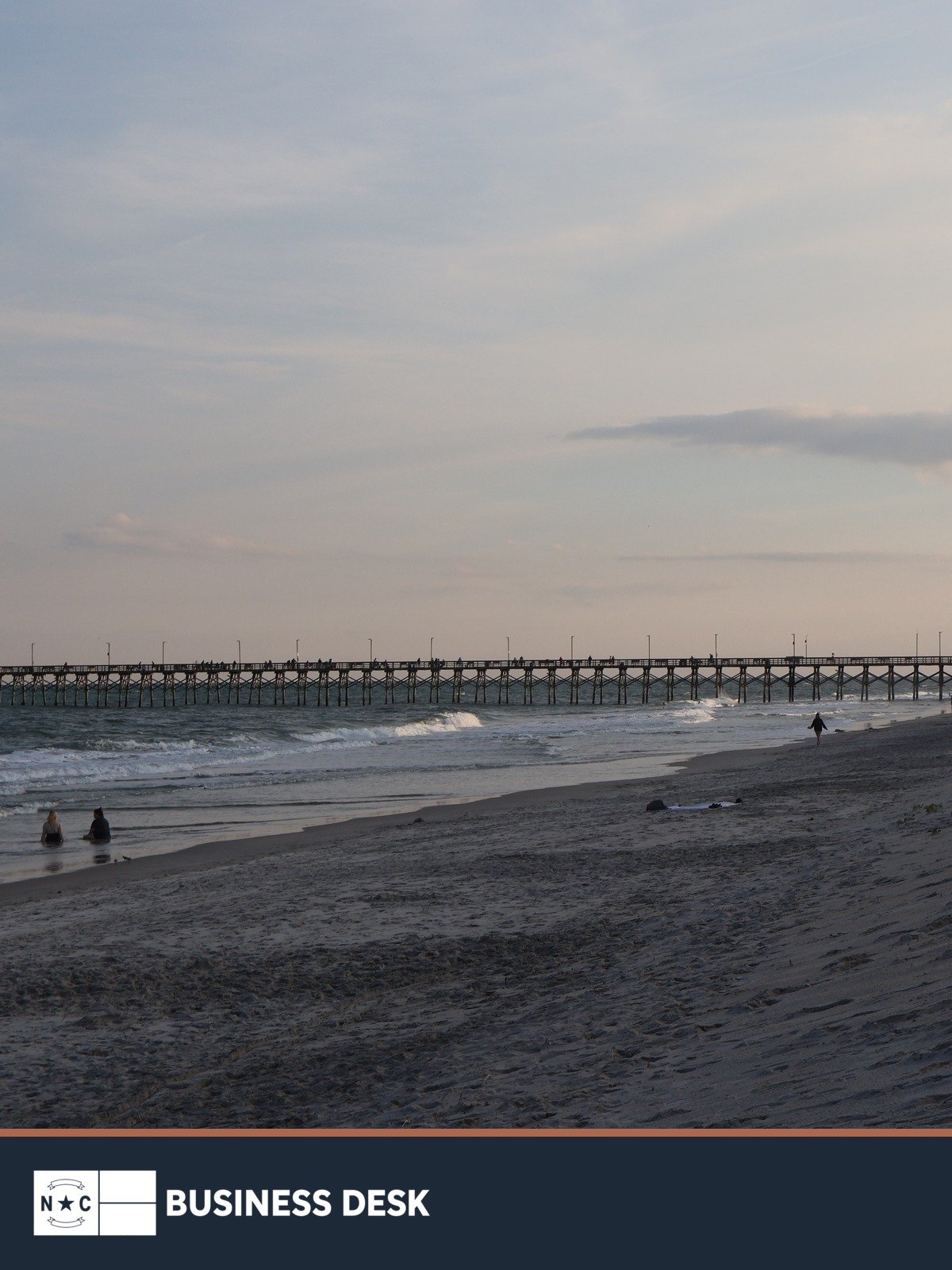
SURF CITY – The U.S. House passed a water resources bill that authorizes $292.8 million in federal participation for a Surf City coastal protection project and $40 million for White Lake water infrastructure.
The House approved H.R. 9497, the Water Resources Development Act of 2026, on Sept. 16. The bill now advances to the Senate, according to U.S. Rep. David Rouzer’s office.
The Surf City authorization would support a 50-year coastal storm risk management project. The U.S. Army Corps of Engineers chief’s report recommends a 6.3-mile sand berm and dune system, a 1,000-foot transition berm into North Topsail Beach, dune vegetation and 40 public walkovers.
The Corps estimated the project at $560.9 million using October 2024 prices. That includes $198.6 million for initial construction and $362.3 million for seven future nourishment cycles over 50 years. The estimated federal share totals $292.8 million, while Surf City, the nonfederal sponsor, would provide the balance under federal cost-sharing rules.
The report projects nourishment about every six years from 2027 through 2076. It estimates the project would reduce expected annual storm damage by about 90%, while noting that storms, sea-level change, contractor availability and material conditions could change the cost and schedule.
The bill also authorizes $40 million for water, wastewater, stormwater and other environmental infrastructure improvements in White Lake. It advances flood-risk studies in Whiteville’s Waccamaw River Basin, Fayetteville’s Cross Creek watershed and Topsail Beach, plus a water-supply and ecosystem-restoration study for the Cape Fear River in Cumberland County.
Nationwide, the House Transportation and Infrastructure Committee said the bill authorizes 133 feasibility studies and 14 Corps projects that have completed the federal review needed for congressional construction authorization.
The House vote is an authorization milestone, not an appropriation or construction start. The North Carolina projects still depend on Senate action, final enactment, project agreements, cost sharing and future funding decisions.