
PLYMOUTH — A proposed federal consent decree would require Domtar Paper Company to pay at least $1.905 million, plus interest and certain assessment costs, and record a conservation restriction over roughly 760 acres as part of a lower Roanoke River restoration agreement.
North Carolina and federal natural-resource trustees lodged the proposed decree in U.S. District Court for the Eastern District of North Carolina on Sept. 16. The N.C. Department of Environmental Quality announced the agreement Sept. 21, and public comments remain open through Oct. 16. The terms would become binding only after the court enters the decree; Domtar does not admit liability in the filing.
The payment provisions include $1.75 million, plus interest, for trustee-led restoration and $155,000, plus interest, for restoration planning, implementation and monitoring costs. Domtar also would reimburse NOAA for documented assessment costs incurred after Nov. 3, 2024, through the decree’s effective date.
The agreement also would require Domtar to record a conservation restriction covering about 760 acres of forested wetlands near Warren Neck in Martin County. A companion draft restoration plan calls for evaluating and restoring as many as five lost floodplain connections, reconnecting up to three miles of historic stream channels and improving more than 600 acres of habitat.
The filing concerns the active Plymouth Mill, a roughly 2,400-acre wood and paper-products facility about 1.5 miles west of Plymouth and seven miles upstream from Albemarle Sound. Domtar acquired the mill from Weyerhaeuser in 2007 and assumed specified environmental obligations. Government filings attribute lower Roanoke River injuries to historic releases from the site, including dioxins, furans, mercury and volatile organic compounds.
The proposed settlement gives Domtar credit for completed work that includes a cooling-tower project placed in service in June 2019, lighting changes intended to reduce bird mortality and contributions to a Plymouth waterfront park and boat ramp. The cooling-tower project eliminated the mill’s once-through river-water cooling system, according to the filing.
For Domtar, the proposal creates defined prospective cash, property and restoration obligations while leaving final court approval pending. It does not represent a completed judgment, a restoration-construction award or the selection of contractors.
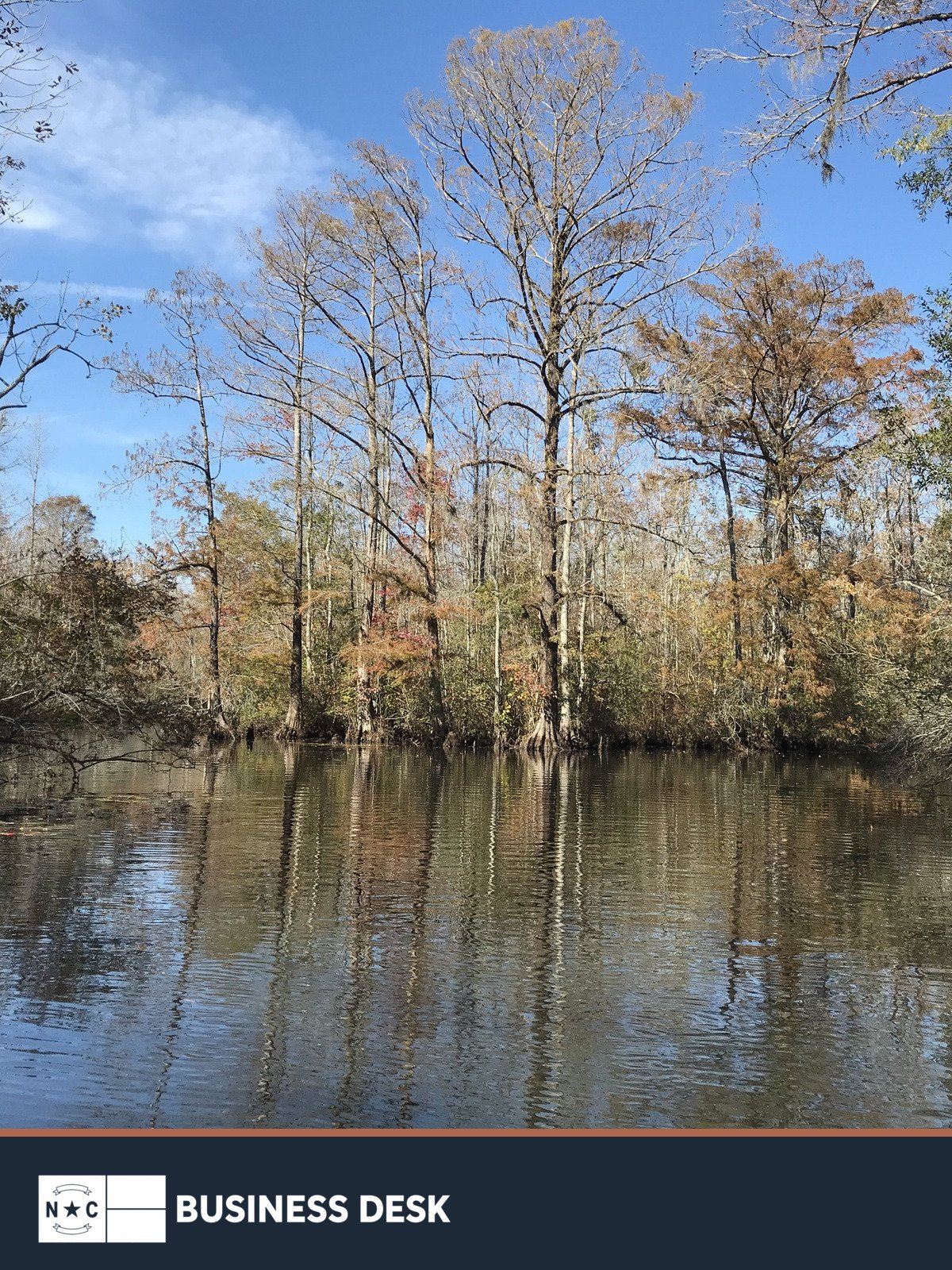
Featured image: Great Island Riverbend at Roanoke River National Wildlife Refuge, a contextual view of lower Roanoke River habitat; it does not depict the Plymouth Mill. Jean Richter/U.S. Fish and Wildlife Service.